
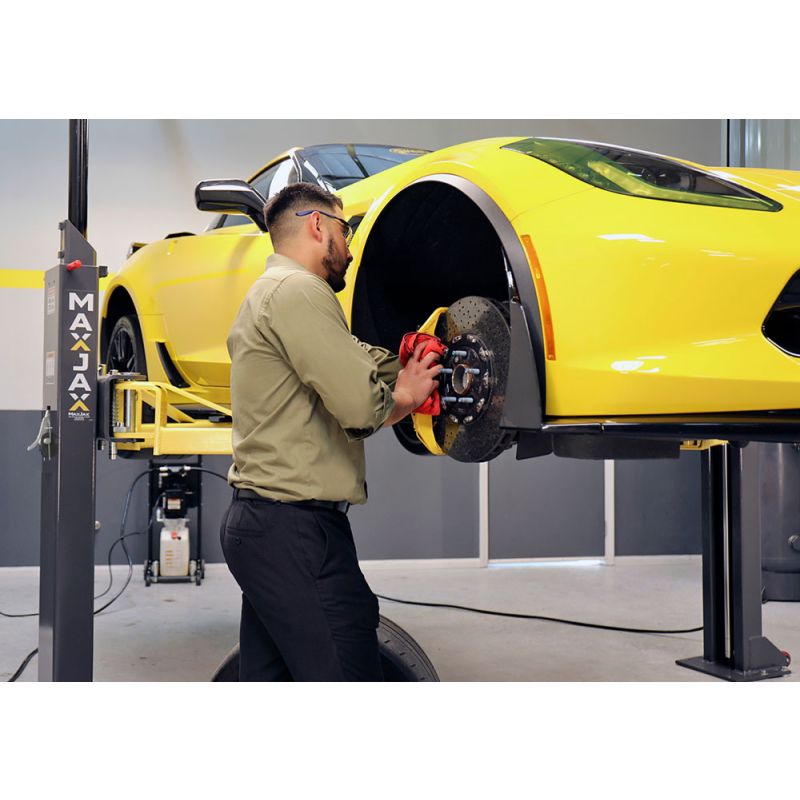
If you like working on your own car, a portable car lift lets you get it in the air without turning your whole garage into a full shop. These compact, movable frames sit low on the floor, roll into position, and tuck away when you are done, yet still raise vehicles high enough for changing tires and brakes, as well as performing basic under-car work in garages, driveways, or tight bays.
Your choice of portable car lift shapes how every job feels. The right setup matches your vehicle’s weight and lift height and lines up with factory lift points. It also fits your power supply and concrete and uses clear controls with mechanical locks to keep the vehicle stable.
This guide walks through some of the best portable car lifts available and explains what sets them apart so you can pick a lift that fits your vehicle mix, space, and budget.
Top Portable Car Lifts
Here are some of the top portable car lifts to consider, along with the main pros and cons of each.
- QuickJack

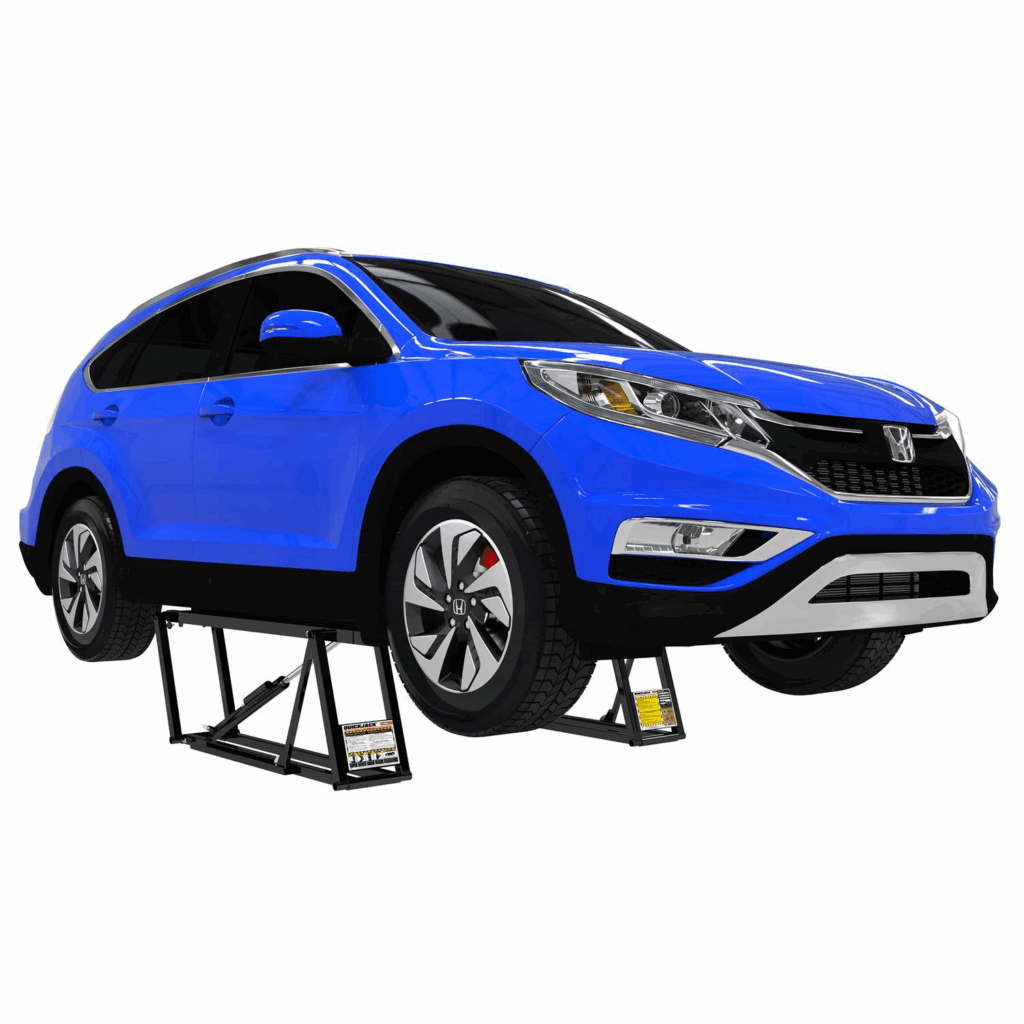
QuickJack is a portable car lift system designed for home wrenchers and professional techs who want real under-car access without committing to a full-size lift. Two independent low-profile frames sit under the vehicle’s lift points and connect to an electric-hydraulic power unit, so a simple button press raises the vehicle instead of relying on separate jacks and stands.
The open-center layout keeps the middle clear for brake, tire, suspension, and exhaust work while a built-in flow divider keeps both frames rising and lowering in sync. Automatic mechanical locks on each frame secure the height once you are in the air, and the whole setup folds flat and rolls away for storage, which makes QuickJack a strong fit for tight garages or mobile jobs.
Pros:
- Portable electric-hydraulic power unit lifts vehicles in seconds with one-touch control
- Low-profile, compact frames slide under most cars and fit easily in home garages
- Open-center layout improves access for brakes, tires, suspension, and exhaust work
- Automatic mechanical locks secure the vehicle at set heights for safer under-car work
- Extended lift point spread supports longer wheelbases, EVs, SUVs, and light trucks
- Factory preassembled hydraulics and pre-installed fittings reduce setup time
Cons:
- Requires a flat, solid concrete surface to operate safely, which limits use on uneven driveways or gravel
- Features a ;ower maximum lift height compared with full mid-rise or two-post lifts, so larger under-car jobs may feel cramped
Learn more about QuickJack car lift
- MaxJax

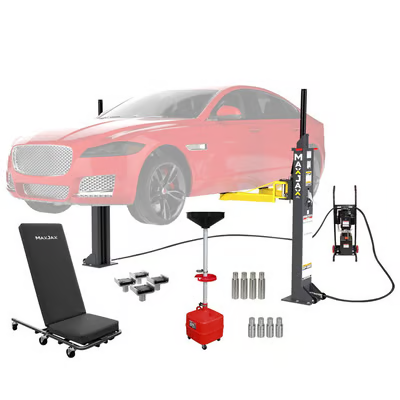
MaxJax is a portable two-post lift designed for home garages and small shops that want true under-car access without a full-size, permanently installed lift. Its floor-mounted columns anchor securely to concrete, then disconnect and roll away when you need open space. A hydraulic power unit and quick-connect hoses feed both posts, giving you a smooth rise to about 49 inches with a 7,000-lb capacity that covers sedans, SUVs, and many light-duty pickups.
Swing arms reach factory lift points, automatic arm restraints lock into place as the vehicle rises, and mechanical safety locks hold height during work. When the job is done, the columns store easily, which makes MaxJax a strong fit for low-ceiling garages, tight bays, or anyone who wants two-post capability without giving up their floor.
Pros:
- Patented portable two-post design adds versatility over mid-rise lifts.
- Built-in wheels let each column roll away for storage.
- Space-saving layout fits low-ceiling garages needing true two-post lifting.
Cons:
- Freight delivery can be inconsistent for large crates
- Shipping and communication can be poor on some orders
- Supplied anchors may require upgrades on thinner concrete
Learn more about portable car lifts
- BendPak

BendPak makes low-rise and mid-rise portable lifts for home garages and service bays that want pro-level build quality without installing a full two-post system. Their LR-60P low-rise lift uses a 6,000 lb electric-hydraulic setup with rubber blocks and UHMW rollers, so one person can roll it into place and raise a vehicle quickly. The MD-6XP mid-rise lift offers the same 6,000 lb capacity but adds scissor-style platforms, adjustable arms, and multi-position lock bars that give you solid access for brakes, tires, detailing, and light under-car work.
What separates BendPak from many competitors is the engineering behind the frame. They use heavy steel channels, reinforced crossbars, and over-engineered lifting components designed to withstand far more than their rated capacity.
Pros:
- Adjustable arm assemblies allow lifting of both cars and light-duty trucks.
- Small-footprint portable lift fits narrow bays and moves from bay to bay easily.
- Multi-position mechanical locks secure the vehicle at height for steady work.
- Rubber lift blocks protect factory lift points during raising and lowering.
Cons:
- Safety latches can be noisy during operation compared to other lifts
- Atlas
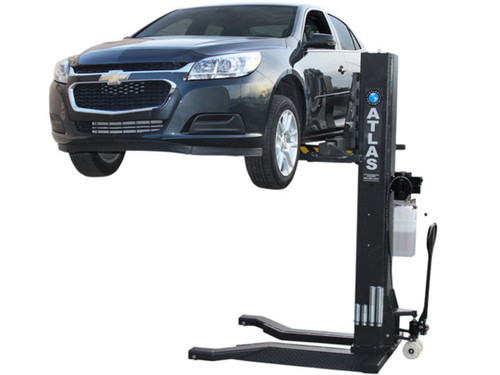
Atlas offers portable mid-rise car lifts designed for home garages and small service spaces. The lifts use a scissor platform with a 6,000 lb capacity and an electric-hydraulic power unit connected by quick-attach hoses.
The lift table and rubber blocks contact the vehicle’s frame points, and multiple safety-lock positions hold the height while you work. The unit rolls into place with built-in wheels and stores against a wall or floor area when lowered. This layout provides under-car access for brake, tire, and light suspension tasks.
Pros:
- Built-in ramp lets vehicles drive over the base to save floor space.
- Chain break mechanism locks the carriage automatically in the event of chain failure.
- Open layout gives clear room to walk under or move around the vehicle.
- Nine foot compatible column lifts many vehicles high enough for broader access.
Cons:
- Lowered pad height of some models limits access for very low vehicles.
- Minimum wall-mount height requirements restrict installation in low-ceiling garages.
- Challenger
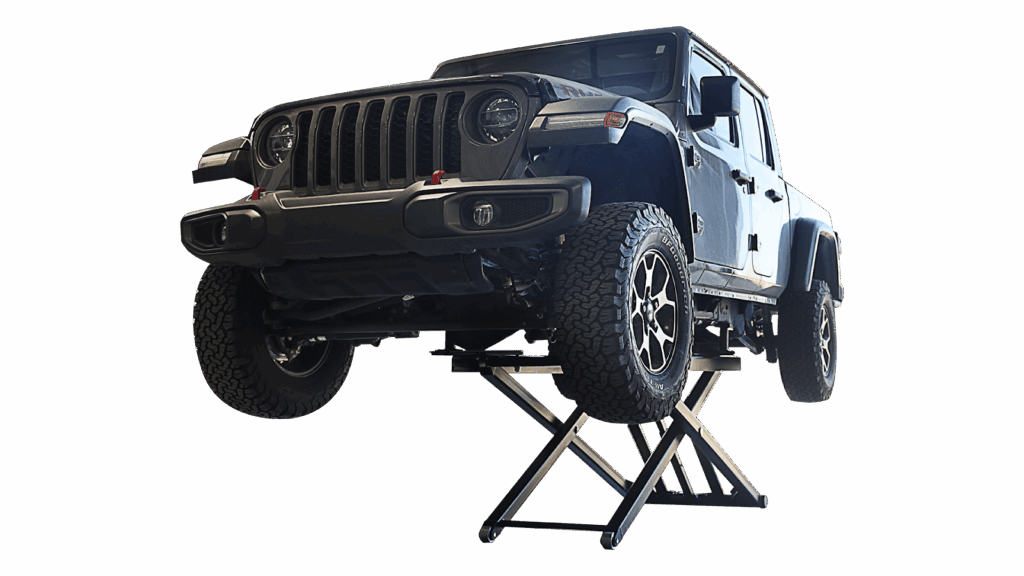
Challenger’s MR6 is a portable mid-rise car lift with a 6,000 lb capacity for small passenger cars and light trucks. Its lift platform works with arms and rubber pads that reach the vehicle’s lift points.
The motor mounts on a tow dolly so the unit rolls on concrete indoors or outdoors. The lift raises to about 53 inches in roughly 45 seconds and uses a mechanical safety lock at set positions for brake, tire, and exterior service.
Pros:
- Rotating arms with rubber pads fit low and taller chassis heights.
- Short and tall adapters reach a wider range of vehicle lift points.
- Six safety lock positions provide flexible headroom for higher-profile vehicles.
- Low drive-over clearance saves shop space for easier vehicle access.
Cons:
- Mid-rise lift height does not provide full standing clearance under most vehicles.
- Overall weight and platform size limit how often the unit is repositioned in smaller or crowded garages.
- Forward Lift

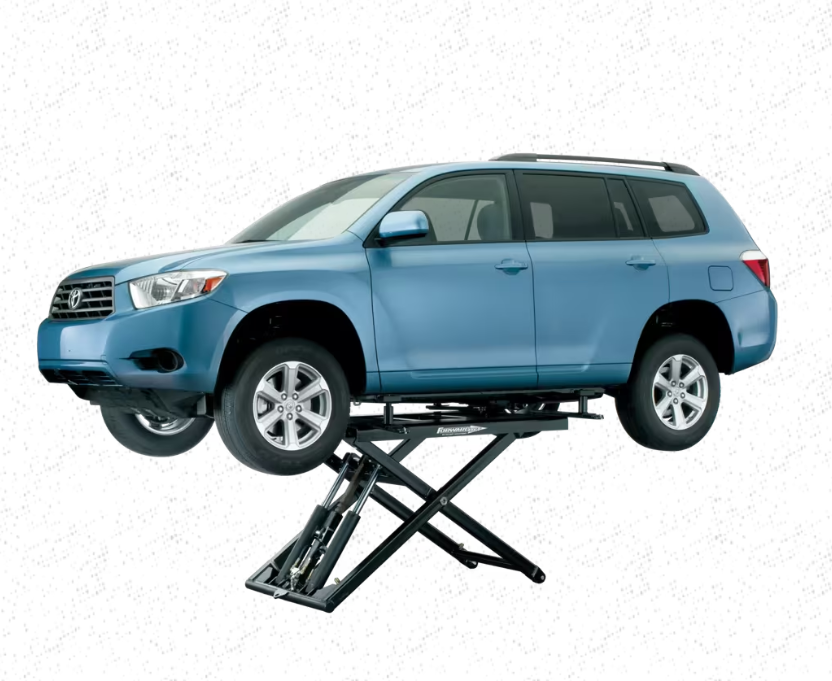
Forward Lift’s 6000MRL is a 6,000-pound capacity mid-rise portable lift for shops, homes, and hobby spaces with low ceilings or extra bays during busy periods. It uses a scissor design that you can move or store when not needed and a single-phase 115-volt portable power unit. Dual hydraulic cylinders raise vehicles to about 52 inches, while seven locking positions hold that height. Swing arms with pad adapters reach tires, brakes, and bodywork areas at a working height above the floor.
Pros:
- Multiple locking positions provide flexible safety settings across lift height.
- Low-profile height suits low-ceiling shops or temporary work bays.
- Lowered frame and full-rise height provides better access for tires and bodywork.
- Portable design lets you move or store the lift when not in use.
Cons:
- Provides only a mid-rise working height, so you do not get full standing clearance under most vehicles.
- Requires a flat, solid concrete surface and adequate bay space, so it is not suited to gravel or very small garages.
Features to Consider in Portable Car Lifts
Here are some factors to consider when choosing a portable car lift:
Portability and Size
Portability and size matter when you choose a portable car lift. Start by looking at how much floor space the lift takes and how it fits your garage layout. A compact frame or split design lets you move the lift between bays and store it against a wall or under a vehicle when you finish.
Check the lift’s weight and look for wheels or handles that make rolling it safe. Match the platform length and width to your vehicle wheelbase and track, so the lift points sit where the maker expects. Plan for future vehicles so the overall size still works.
Height and Weight Capacity
When you compare portable car lifts, start with weight capacity. Choose a lift that safely supports your heaviest vehicle and add a safety buffer, meaning you select a model rated above that vehicle’s weight rather than one that only meets the exact number. Check both the total capacity and how the rating is split across platforms or arms. Next, look at lift height.
Higher lift points give more room to work under the car, but they also need more ceiling clearance. Make sure the maximum height fits your garage and still leaves space to move tools, jacks, and creepers around the vehicle. For routine tire, brake, and detailing work, a lower mid-rise height may be enough and often feels more stable.
Safety and Maintenance
While OSHA doesn’t have a lift-specific standard for automotive lifts, employers are still responsible for providing a workplace free from recognized hazards. In practice, industry consensus standards, like ANSI/ALI guidance for lift operation, inspection, and maintenance, can help demonstrate hazard recognition and feasible safety steps. That same mindset works well in home garages too.
Look for portable car lifts with clear safety features and simple maintenance steps. Prioritize automatic safety locks that hold the lift mechanically at working height and help prevent sudden drops. Confirm that each unit has a clear rated capacity and stay within that limit. Choose models with readable labels and manuals, then train anyone who uses the lift to follow them.
Plan regular inspections to check hoses, cables, pins, and lock bars for wear, leaks, or damage, and replace parts as needed. Schedule a yearly inspection with a qualified lift inspector so the lift stays in safe working condition over time.
Wrenchers Can Help You Choose the Perfect Portable Car Lift
Choosing a portable car lift is really about how you work, not just the numbers on a spec sheet. You need a lift that fits your ceiling height and concrete, reaches the right lift points on your vehicles, and stays practical to roll out, set up, and store on busy days. Details like adapter height, ramp style, power requirements, and floor thickness matter as much as capacity when you want a lift you will actually use often.
Wrenchers has a full range of portable car lifts, including scissor, pantograph, and frame-style systems rated up to about 8,000 lb for everything from compact cars to light trucks. You can compare lift heights, capacities, layouts, and bundle packages with wall hangers or adapters, while checking floor requirements and vehicle fit so the lift matches your space and the vehicles you service.
Explore Portable Car Lifts with Wrenchers.
Best Portable Car Lifts FAQs
What type of vehicle lifts are available?
Portable car lifts come in several types, each built for specific spaces and jobs. Low-rise and mid-rise scissor lifts sit close to the floor and raise a vehicle partway, which works well for tires, brakes, and detailing in home garages or small bays.
Portable two-post lifts use columns and swing arms that reach factory lift points and give fuller under-car access while still rolling or unbolting out of the way. Portable single-column and mobile-column lifts move on wheels and can service different bays or heavier vehicles.
You also can use portable ramp-style or platform lifts for quick oil changes and inspections. These lifts allow you to drive onto a platform and lift the vehicle as one unit.
What weight capacity should I look for?
For portable car lifts, choose a capacity that covers your heaviest vehicle and leaves a safety margin. Check the gross vehicle weight rating (GVWR) or curb weight on the door-jamb label or in the owner’s manual. Compact cars often weigh around 3,000 pounds, many sedans 3,500 to 4,500 pounds, and larger SUVs or half-ton pickups can reach 6,000 pounds or more.
Pick a lift with a rating higher than that number, including any tools or cargo. Never lift a vehicle with passengers inside, and never exceed the posted rating. When comparing models, choose the higher-capacity option if you are unsure.
Do I need a professional to install a vehicle lift?
You may or may not need a professional installer, depending on the lift and your skill level. For anchored two-post, four-post, or in-ground lifts, many manufacturers and safety bodies recommend a qualified installer. A pro knows how to check concrete thickness, position columns, torque anchor bolts, set up power, and test safety locks before you put a vehicle in the air.
Some portable and low-rise lifts are designed for owner setup, but you still need to follow the manual closely, use the correct power supply, and stay within the rated capacity. If any step feels confusing, involve a professional or ask the lift manufacturer for an installer referral to reduce installation mistakes and safety risks.
