
Choosing the best air compressor is essential for powering tools reliably and keeping work moving without interruptions. A quality air compressor delivers consistent pressure and airflow, so impact wrenches, spray guns, tire inflators, and pneumatic tools perform as they should.
The right air compressor maintains stable pounds per square inch (PSI) and sufficient cubic feet per minute (CFM), supports continuous use when needed, and matches the demands of your workspace, whether that’s a home garage or a professional shop.
In this guide, you’ll discover the best air compressors and how to choose the right one based on your tools, workload, and space.
Discover the best air compressors
Air compressors enable you to inflate tires, power pneumatic tools, support paint and spray work, and handle routine shop and jobsite tasks that rely on compressed air. There are plenty of options on the market—here are some of the best.
- BendPak TSP-5 Patriot Series air compressor

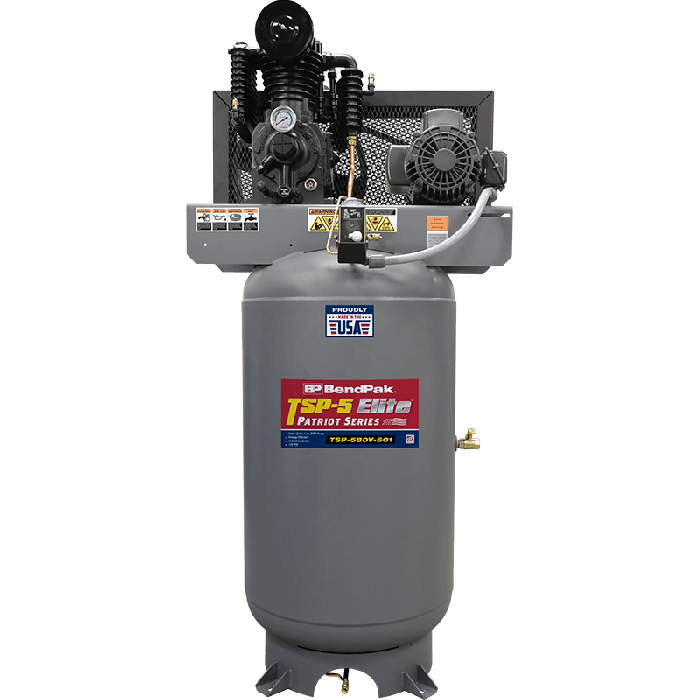
BendPak’s TSP-5 Patriot Series (TSP-580V-601) is built for heavy-use work, including automotive and body repair. It uses an energy-efficient 5-horsepower motor and an extra-quiet, low-RPM pump that runs cooler and helps reduce operating costs over time.
This model uses a two-stage, splash-lubricated pump with oil lubrication, plus an 80-gallon vertical tank. It delivers 17 CFM at 175 PSI, with a maximum of 175 PSI. This output supports tools that require continuous airflow, such as impact wrenches, sanders, grinders, spray equipment, and tire service tools, without frequent pressure drop.
For day-to-day shop practicality, it includes anti-vibration pads to reduce machine movement, a cooling fan system to maintain lower operating temperatures, and an electronic drain valve to manage tank moisture.
Pros
- Meets American Society of Mechanical Engineers (ASME) certification requirements
- Runs quietly, especially compared to many higher-speed compressors
- Uses an energy-efficient motor to reduce wasted power during operation
- Supports heavy shop work, such as automotive and body repair, without frequent pressure drops
Cons
- Built for heavy-duty use and may be less suitable for basic home tasks
Learn more about BendPak TSP-5 Patriot Series
- CAS Contractor Series Gas Reciprocating Air Compressor
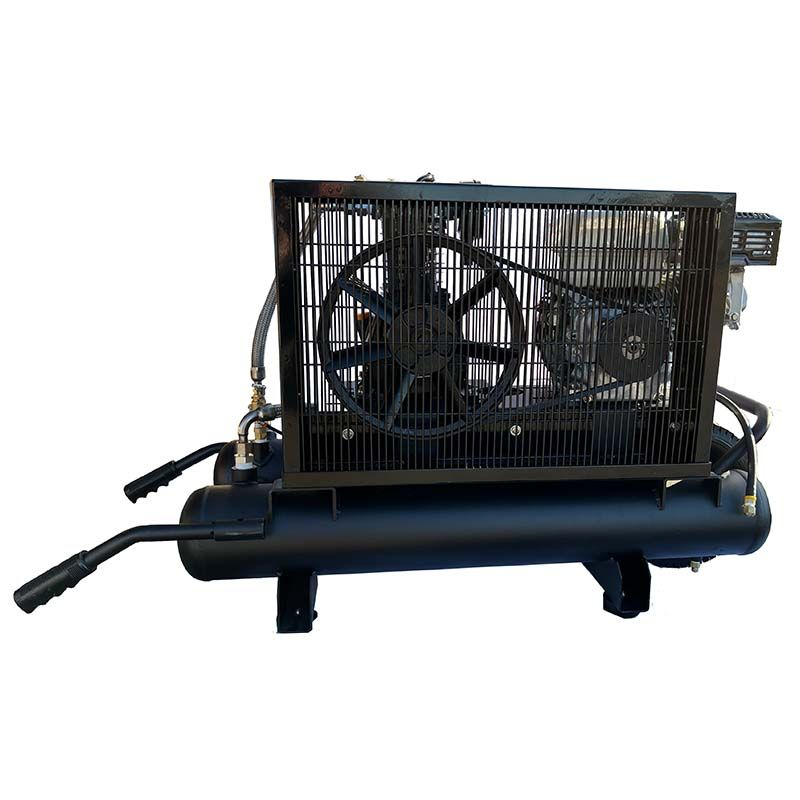
CAS Contractor Series Gas Reciprocating Air Compressor (P55HG11) is intended for contractors, farmers, and ranchers who need compressed air in locations without electrical power. It uses a 5.5-horsepower gas engine with a single-stage pump and a wheelbarrow-style frame with solid rubber tires and lifting handles.
It produces 12 cubic feet per minute at 125 pounds per square inch, with a maximum working pressure of 135 pounds per square inch. The dual tanks have a total capacity of 10 gallons, and the unit includes quick air connections for two operators. It includes features such as a solid cast-iron pump, disk-and-spring valves, a low-RPM pump, a fully enclosed belt guard, a heavy-duty air filter, a front-mounted oil sight, and an oil drain for routine oil changes.
Pros
- Allows operation in areas without electrical power, such as fields, farms, and remote jobsites
- Handles rough terrain and outdoor movement
- Enables two operators to work at the same time
Cons
- Takes up more floor and truck space than small portable compressors
- Requires engine upkeep in addition to compressor maintenance
- Is louder than most electric garage or shop compressors
Learn more about the CAS contractor series gas reciprocating air compressor
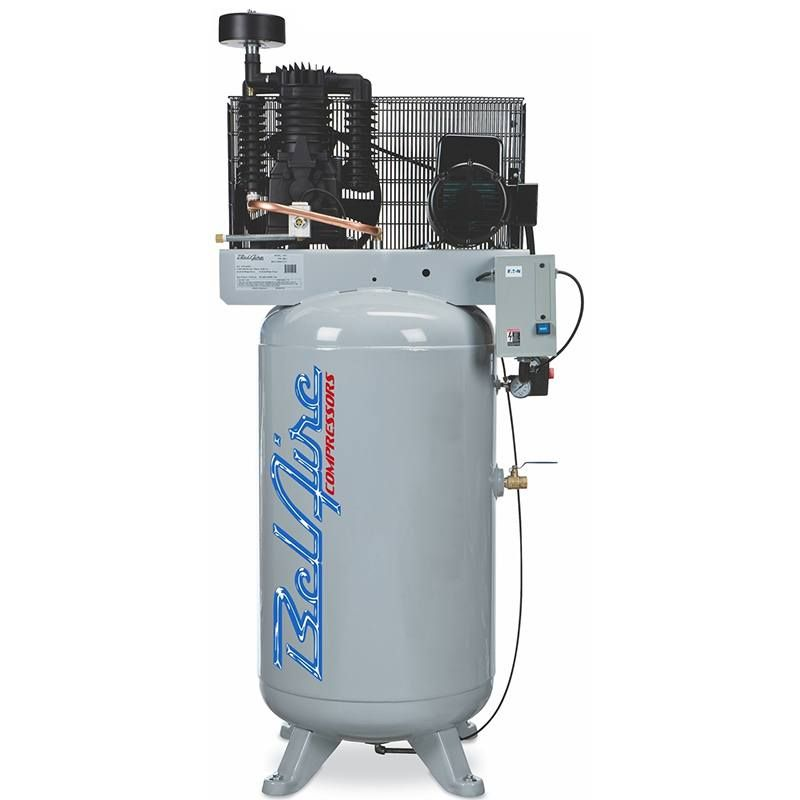
3. BelAire’s two-stage compressor

BelAire’s two-stage compressor (318VLE) is an electric, belt-driven unit with an 80-gallon vertical tank and a two-stage, oil-lubricated pump. It produces 22.3 cubic feet per minute at 100 pounds per square inch and supports a maximum pressure of 175 pounds per square inch.
The 318VLE includes cast-iron cylinders, steel valve components, aluminum heads and coolers, and an ASME-code tank with ASME-certified safety valves. It uses a start-stop pressure switch control and includes a magnetic starter. For monitoring and protection, it features an oil level sight glass and a low-oil shut-off switch. It also includes an automatic tank drain and a triple-pass, pump-mounted aftercooler. Power requirements are 208 to 230 V AC, single-phase, with a recommended 60-amp breaker.
Pros
- Improves safety during operation with an ASME-rated tank and safety valve setup
- Simplifies routine upkeep with built-in tank draining and visible oil level checks
- Keeps operating temperatures under control during longer work sessions
Cons
- Needs routine upkeep because it is oil-lubricated and needs oil checks
- Requires a fixed install because it is a heavy, stationary unit
- Requires drainage planning to manage moisture buildup in the tank
Learn more about BelAire’s two-stage compressor
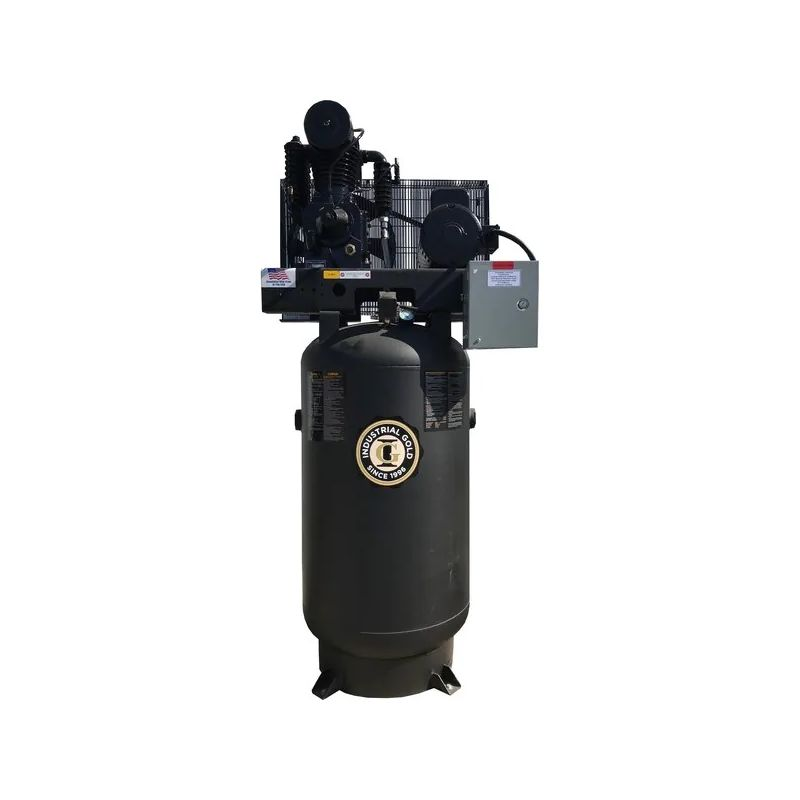
4. Industrial Gold CI7521E80V-P Air Compressor

Industrial Gold’s CI7521E80V-P is a 7.5-horsepower, three-phase, two-stage reciprocating air compressor in the Industrial Series. It uses an 80-gallon vertical tank and is rated at 24 cubic feet per minute at 175 pounds per square inch.
The compressor features UL electrical controls, an ASME-tested powder-coated steel tank, auto start/stop, and a heavy-duty two-stage solid-cast-iron pump. It also includes a magnetic starter mounted and wired, a fully enclosed belt guard, disk and spring valves, a heavy-duty air filter, stainless-steel flex air lines, and Swedish-steel valves.
Pros
- Supports a 4-5-person shop setup
- Reduces setup friction by eliminating the need for a start-up kit
- Adds long-term coverage options with an optional five-year pump warranty
Cons
- Requires 208–230V power, which may not match standard outlets
- Limits mobility by keeping you in a fixed shop setup
Learn more about Industrial Gold air compressors
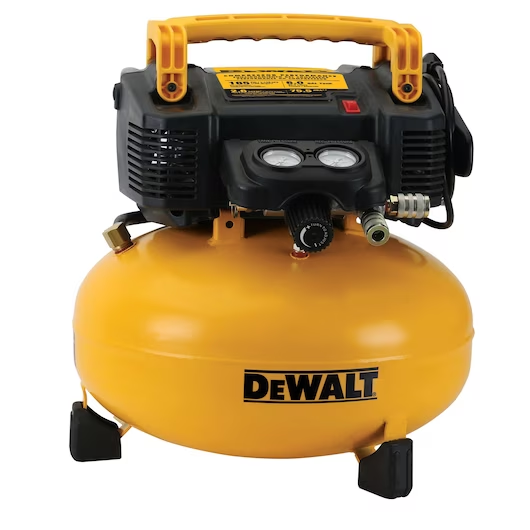
5. DeWalt Heavy Duty 165 PSI Pancake Compressor

The DeWalt Heavy Duty 165 PSI Pancake Compressor (DWFP55126) is a compact, oil-free unit designed for portable use and quick storage. It supports a range of pneumatic tools, includes two couplers for two users, and uses a pancake-style tank footprint that keeps the setup stable on typical jobsite surfaces.
DeWalt’s air compressor models are aimed at common garage and jobsite tasks such as finish work, light framing, tire inflation, and general cleanup.
Pros
- Holds pressure well, with minimal overnight pressure loss
- Runs quieter than many comparable pancake compressors
- Supports common pneumatic tasks like nailers, trim work, and light painting
Cons
- Leaks air over time in some units, often around the regulator or fittings
- Fails at the regulator for some users, including sticking open or not controlling pressure
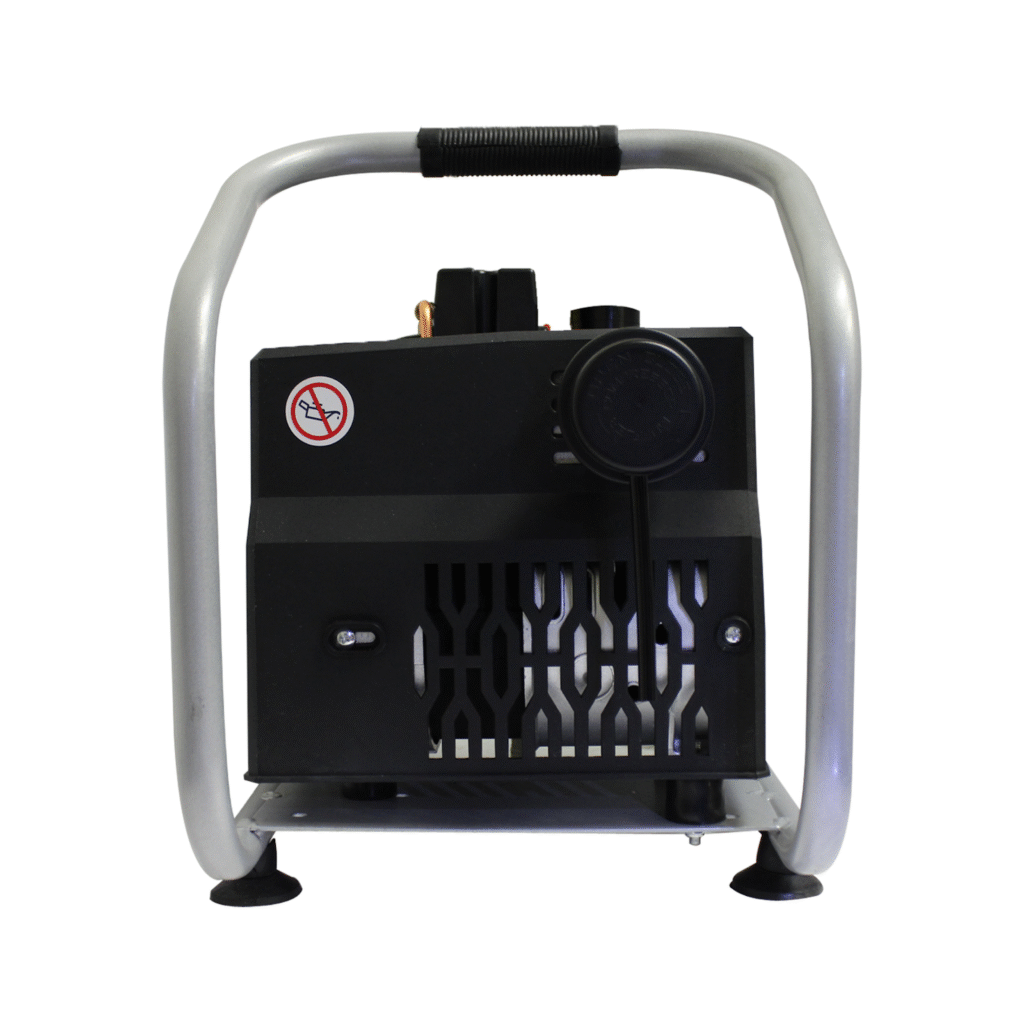
6. California Air Tools 1-Gallon 1P1060S

California Air Tools focuses on compact, oil-free air compressors designed for indoor use where noise, portability, and basic air needs matter more than continuous output. The company’s lineup centers on light-duty compressors for garages, workshops, apartments, and shared spaces, with an emphasis on low sound levels and minimal maintenance.
The California Air Tools 1P1060S is a small, portable air compressor with a single-piston, oil-free design and a one-gallon steel tank. It is intended for light tasks such as inflating tires and sports equipment, cleaning with blow guns, and operating small nailers or airbrushes. Its compact size and lightweight build make it suitable for storage in tight spaces and for indoor use where noise sensitivity is a concern.
Pros
- Keeps maintenance simple with an oil-free pump design
- Works for light tool tasks like brad/finish nailers, staple guns, airbrushes, and blow guns
Cons
- Requires frequent cycling during use because of the one-gallon tank size
- Falls short for continuous, high-demand tools like sanders, grinders, or impact wrenches
- Caps maximum pressure at 120 pounds per square inch, which may not suit higher-pressure use cases
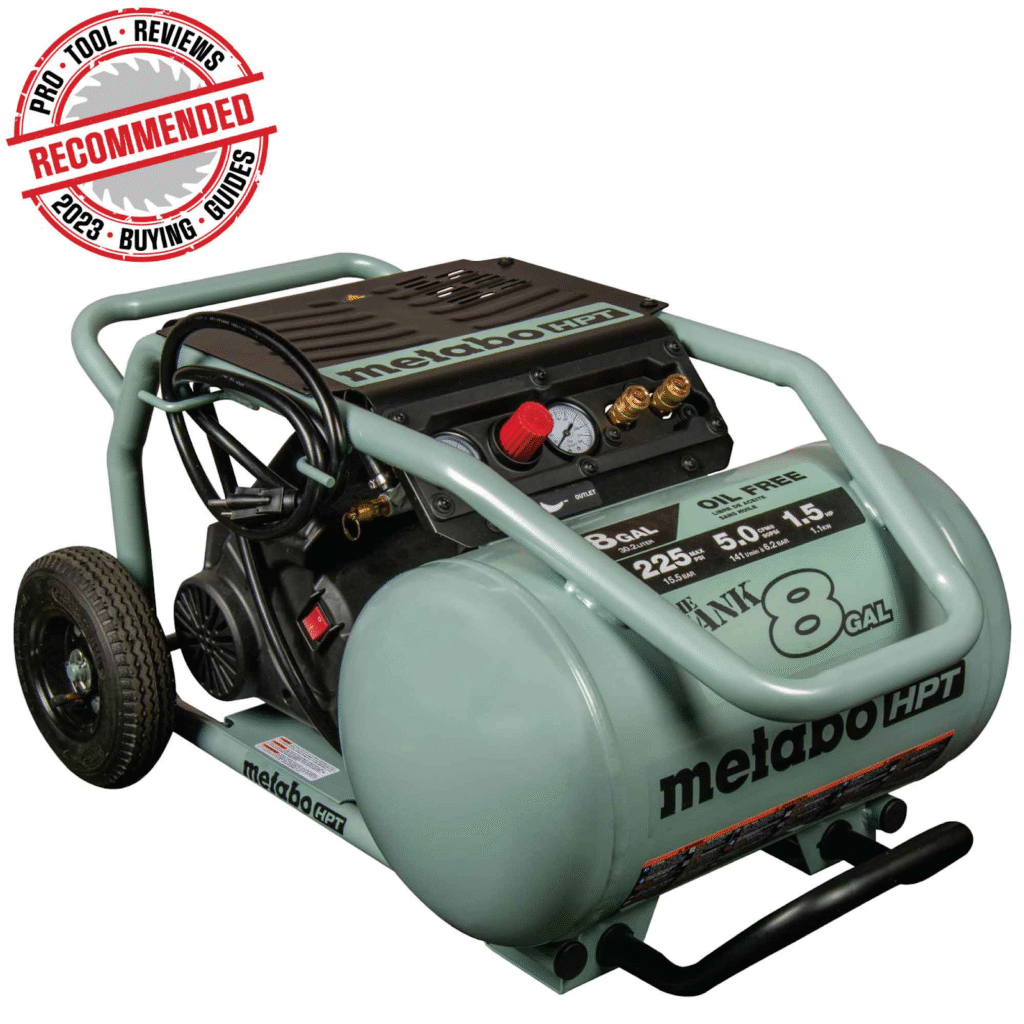
7. Metabo Tank 8-Gal Trolley Air Compressor

Metabo HPT is a long-standing power tool manufacturer with roots in professional construction, framing, and finish work. The brand is closely associated with pneumatic nailers and jobsite equipment for daily trade use, emphasizing durability, mobility, and compatibility with common crew workflows.
Metabo Tank 8-Gallon Trolley Air Compressor (EC1315S) is a portable, wheeled air compressor designed for jobsite use, where multiple nailers may run simultaneously. It uses an oil-free motor and a trolley-style frame with rubber tires, allowing it to be rolled across uneven surfaces instead of lifted. The eight-gallon tank provides enough stored air to support framing, roofing, siding, and finish nailing tasks, making it suitable for small crews working off a single compressor on residential or light commercial sites.
Pros
- Supports multiple nailers at once for framing, roofing, siding, and finish work
- Provides an oil-free motor design
- Reduces dirt intake with a top-mounted air filter setup
Cons
- Relies on corded power, which can restrict placement on jobsites without nearby outlets
- Includes a one-year warranty, which may not match longer coverage expectations
8. Rolair 8422HK30

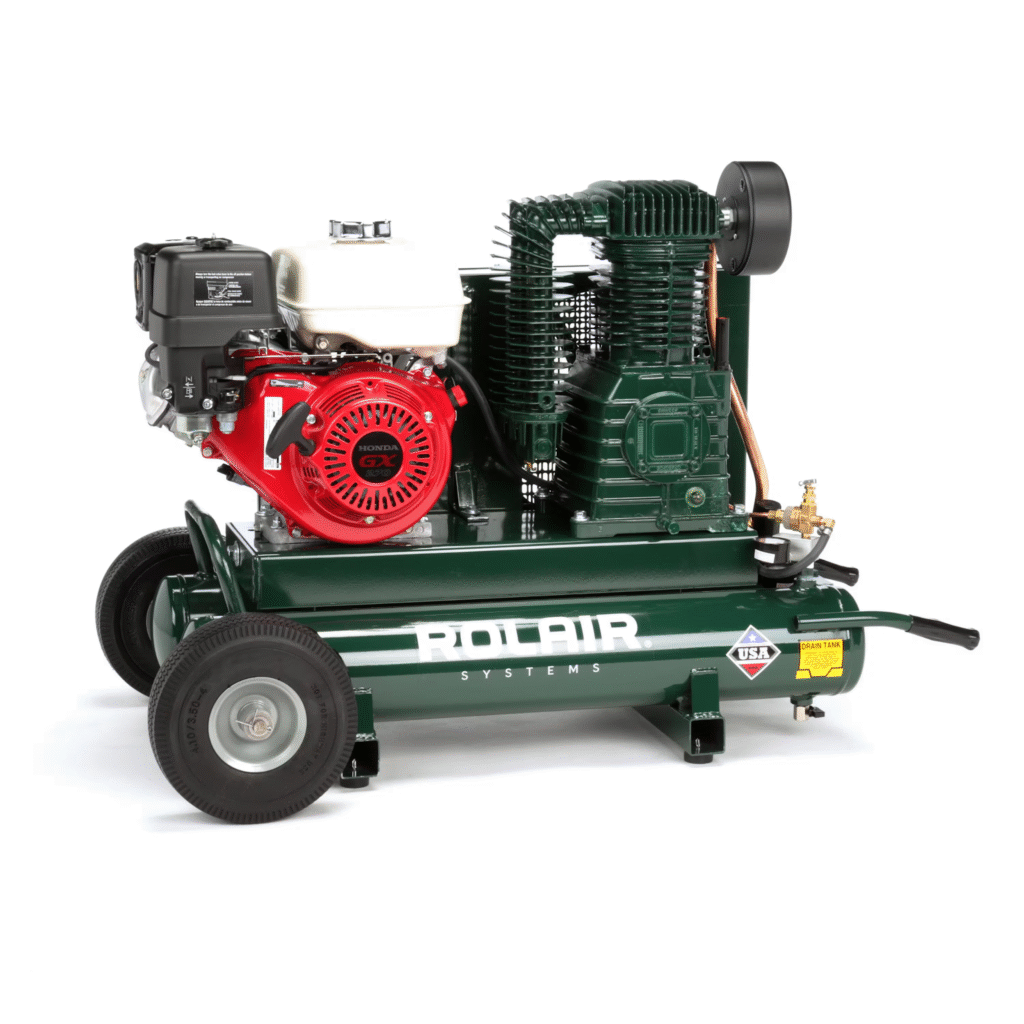
Rolair 8422HK30 is a wheeled, gas-powered, two-stage air compressor built around a 270 cc (GX270) Honda engine with automatic idle-down and low-oil shutdown. It delivers 20.1 cubic feet per minute at 90 pounds per square inch and uses an atmospheric unloading system intended to prevent oil consumption.
The pump uses twin cast-iron cylinders with splash lubrication, ball bearings, cast-iron valve plates with Swedish lamellar reed valves, aluminum alloy connecting rods with automotive-style inserts, an oil sight gauge, and an air-cooled aftercooler. Standard equipment includes a pressure gauge, automatic pilot valve operation, an industrial flexible discharge hose, a totally enclosed steel belt guard, an intake filter with silencer, and a safety relief valve, with a 9-gallon tank on a wheeled frame.
Pros
- Runs without electrical power due to the gas engine setup
- Reduces fuel use during idle time with automatic idle-down
Cons
- Creates higher job-site noise compared to many electric compressors
- Stores less reserve air than large shop tanks due to its capacity
Types of air compressors
Air compressors are built in different forms to match how and where they’re used. Tank shape, capacity, and portability all affect how much air is available and how the compressor fits into a workspace or jobsite setup.
Pancake
Pancake air compressors use a short, round tank that sits low to the ground, providing a stable footprint. They’re commonly oil-free and portable, making them common in garages and residential jobsites. Pancake compressors are typically used for light-duty tasks such as tire inflation, brad or finish nailing, and general cleanup, rather than continuous or high-demand air tools.
Hot dog
A hot dog air compressor uses a long, cylindrical tank mounted horizontally, keeping the unit compact while providing more stored air than a pancake setup.
You’ll typically see this style used for light- to medium-duty work, such as framing nailers, roofing nailers, and general shop tasks. They’re often portable, available in oil-free or oil-lubricated designs, and suited to users who need more capacity without moving to a large stationary unit.
Twin stack
Twin-stack air compressors use two smaller horizontal tanks instead of a single larger one. The design increases air storage while keeping the unit’s height and footprint manageable for transport and storage.
These types of air compressors are commonly used for light to medium-duty pneumatic tools, including finish nailers, framing nailers, staplers, and general jobsite tasks. Because they carry more stored air than many single-tank portable units, they can reduce the frequency of motor cycling during normal nailing and inflation work.
Wheelbarrow
Wheelbarrow air compressors use a frame with two wheels and a front handle, similar to a wheelbarrow, to support larger pumps and engines while remaining movable. They’re commonly gas-powered and used on job sites where electrical power is unavailable.
Wheelbarrow compressors are suited for tasks such as framing, roofing, siding, fence work, and equipment maintenance, where higher air output is needed, but the unit still needs to be repositioned across uneven terrain.
Vertical
A vertical air compressor uses an upright tank to save floor space, which is why it’s common in garages and shops where space is tight. Most vertical units are stationary and use larger tanks than portable models, supporting longer work sessions and a steadier air supply.
Depending on airflow and pressure ratings, they’re often used for running impact tools, sanders, grinders, spray equipment, and tire service tools in a shop setting.
What really matters when choosing an air compressor
Choosing an air compressor comes down to matching the machine to how it will actually be used. Tool requirements, available power, space, and duty cycle all affect whether a compressor will fit your setup or create limitations over time. Here are some factors to consider when choosing the best air compressor for your needs:
- Motor and mechanism: The motor and pump design determine how air is produced and delivered. Single-stage pumps compress air once, while two-stage pumps compress it in two steps for higher pressure. Oil-lubricated and oil-free designs affect maintenance, air quality, and service intervals.
- Body: The compressor body includes the frame, tank construction, and protective components. Stationary units are built for permanent placement, while portable bodies prioritize balance, handles, or wheels. Steel tanks and enclosed belt guards are common in heavier-duty models.
- Tank size: This affects how long air can be supplied before the pump cycles. Smaller tanks suit intermittent tasks, while larger tanks support longer tool use and multiple tools. Tank orientation, vertical or horizontal, also affects space requirements.
- Power source: Air compressors may be electric or gas-powered. Electric models depend on available voltage and phase, while gas compressors are used where electrical power isn’t accessible. Power source selection affects placement, mobility, and operating environment.
- Pressure and volume: Pressure is measured in pounds per square inch, and volume is measured in cubic feet per minute. Tools require specific pressure and airflow to operate correctly. Matching compressor output to tool demand prevents pressure drop during use.
- Portability and size: Compressor size and weight determine how easily it can be moved or stored. Portable units are designed for transport, while stationary units are intended to stay in one location. Available floor space and jobsite access often drive this decision.
- Noise level: Noise output varies by motor type, pump speed, and enclosure design. Lower noise levels are often preferred in indoor or shared environments, while higher noise levels are more common in outdoor or industrial settings.
Choosing the best air compressor for your needs
The right air compressor supports consistent tool operation, keeps workflows predictable, and prevents downtime caused by pressure drop or undersized equipment. Choosing a compressor that matches your tools, power setup, and work volume helps ensure reliable performance across everyday shop and jobsite tasks.
Wrenchers offers a broad selection of air compressors for garages, mobile job sites, and full-scale shops. From portable electric models to high-capacity stationary and gas-powered units, you can compare tank styles, airflow ratings, pressure capacity, and power requirements to find equipment that fits how you actually work.
Selecting an air compressor from trusted brands at Wrenchers lets you compare specifications side by side and choose a setup that aligns with your workload and space. Review options, compare configurations, and invest in equipment that supports steady, dependable operation over time.
Get started with Wrenchers today.
Best Air Compressors FAQs
What type of air compressor is best for home use?
For home use, a portable electric air compressor is usually the best fit. A pancake, hot-dog, or small vertical compressor lets you inflate tires, blow out dust, and run light pneumatic tools like brad nailers or finish nailers. These formats also allow you to store the compressor in a garage or utility area without dedicating permanent floor space.
What PSI rating should I look for in an air compressor?
The PSI rating you need depends on the tools you plan to use. Many household and light-duty pneumatic tools are designed to operate at around 90 psi. Choosing a compressor with a higher maximum PSI allows the tank to store more air, helping maintain steady pressure while the tool is in use and reducing the frequency of motor cycling.
What’s the difference between a single-stage and a two-stage air compressor?
A single-stage air compressor compresses air once and delivers it directly to the tank, making it suitable for light to moderate tasks and intermittent tool use. A two-stage air compressor compresses air in one cylinder, then routes it to a second cylinder for additional compression, allowing higher maximum pressure and supporting longer work periods where tools require a consistent air supply.v
