
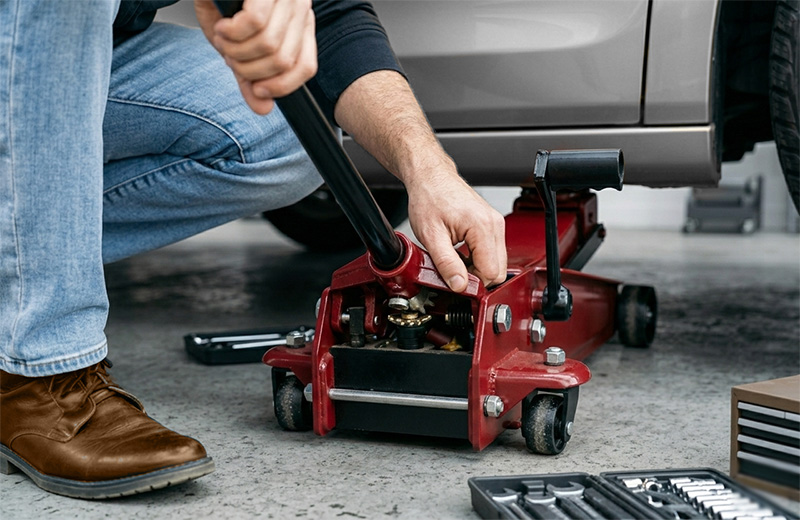
If you work on your own car, crossover, or light truck and want more stable support than a factory jack, a 3-ton floor jack is often the most practical choice. Most passenger vehicles on the road today weigh between 4,300 and 5,700 pounds, which means a properly rated floor jack can safely lift one end of the vehicle for common maintenance work.
When shopping for the best 3-ton floor jack, details like lift range, starting height, and safety features matter more than capacity alone. The right jack should slide easily under your vehicle, lift smoothly, and feel stable during tire changes, brake service, or routine inspections.
In this guide, you’ll find top 3-ton floor jacks worth considering, what sets each one apart, and how to choose a model that fits your vehicle and workspace.
Find the best 3-ton floor jack
To build this list, we focused on 3-ton floor jacks that are practical for real garage use. We looked at lift range, ease of positioning, safety features, build quality, and how each jack handles common maintenance tasks.
- Ranger RFJ-3T

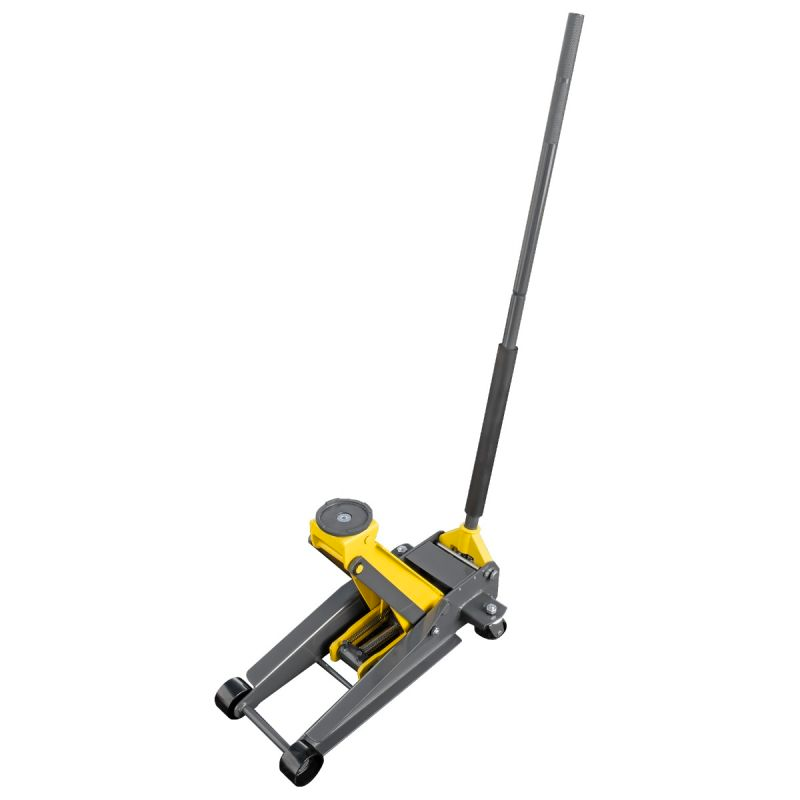
The Ranger RFJ-3T uses a compact, racing-style steel chassis with reinforced flanged side plates designed to keep the saddle planted at the lift point. It has a lowered pad height of just under five inches and lifts to just over 20 inches, giving it more vertical range than many standard 3-ton jacks.
The hydraulic system uses double-sealed components to reduce contamination and extend service life during frequent use. A roller-cam plunger assembly and universal-joint release control how the jack rises and lowers, helping prevent sudden drops. Its wider rear stance also adds stability when lifting heavier corners of a vehicle.
Pros
- Stays firmly positioned at the lift point during use
- Lifts and lowers smoothly with good control
- Feels easy to maneuver in tight spaces
Cons
- Weighs more than basic home-use floor jacks
Learn more about the Ranger RFJ-3T
- Craftsman 3-Ton Steel Hydraulic Floor jack

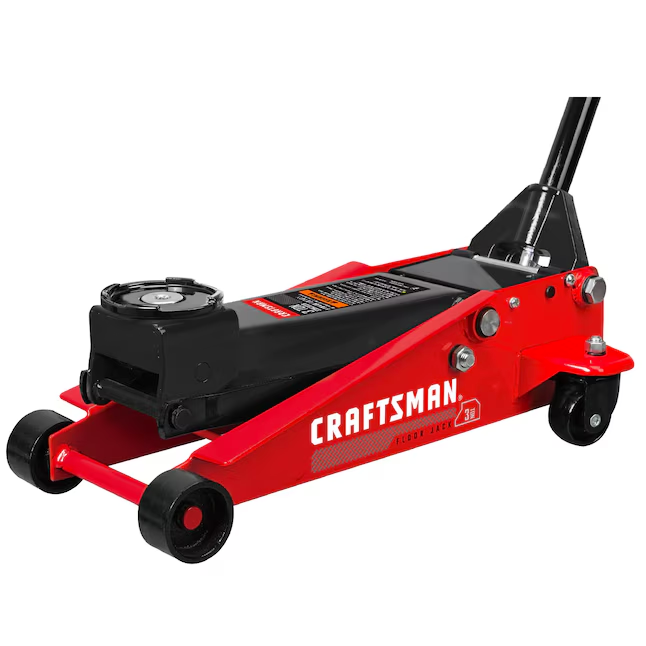
The Craftsman 3-Ton Steel Hydraulic Floor Jack is built around a heavy steel frame with steel casters. Its dual-piston hydraulic system brings the saddle up to the lift point quickly, then transitions into a controlled lift under load. The jack lifts from just over five inches to a little over 18 inches. Rear swivel casters allow the jack to pivot as the vehicle rises, helping it stay aligned with the lifting point. A built-in overload system prevents over-extension of the hydraulic ram.
Pros
- Speeds up lifting with fewer pumps
- Helps keep the vehicle steady during descent
Cons
- Feels harder to use on very low vehicles due to higher starting height
- Takes up more floor space when stored due to the taller chassis
3. Husky 3-Ton Floor Jack

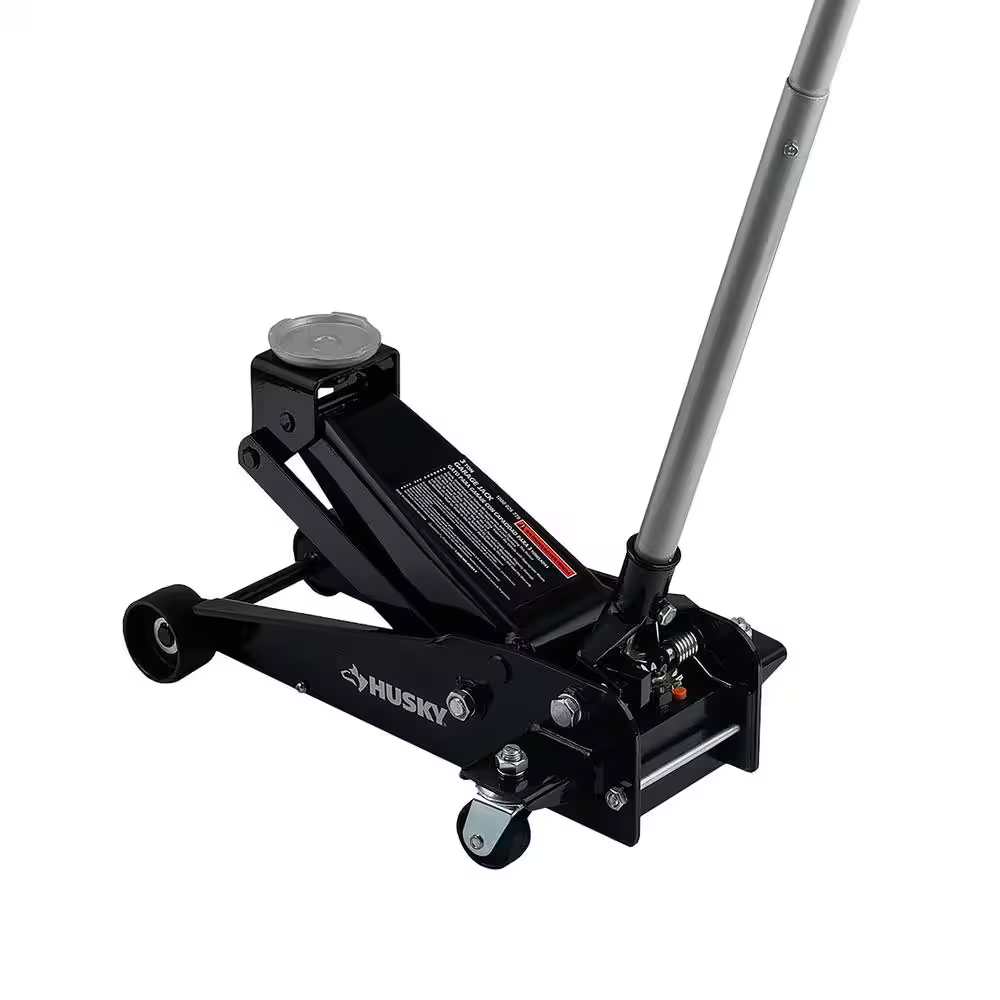
The Husky 3-Ton Floor Jack uses a straightforward hydraulic design with a wide steel chassis and ball-bearing swivel casters for positioning. Its lifting range starts at about 5-1/2 inches and reaches past 18 inches. A 360-degree swivel saddle allows the jack head to rotate slightly as the load rises, helping maintain contact at the lift point.
Pros
- Rolls and positions easily thanks to swivel casters
- Provides workable clearance for most routine maintenance
Cons
- Feels limiting for very low-clearance vehicles
- Lacks the faster lift action found on some dual-pump jacks
4. Daytona 3-Ton Low-Profile Superduty Floor Jack
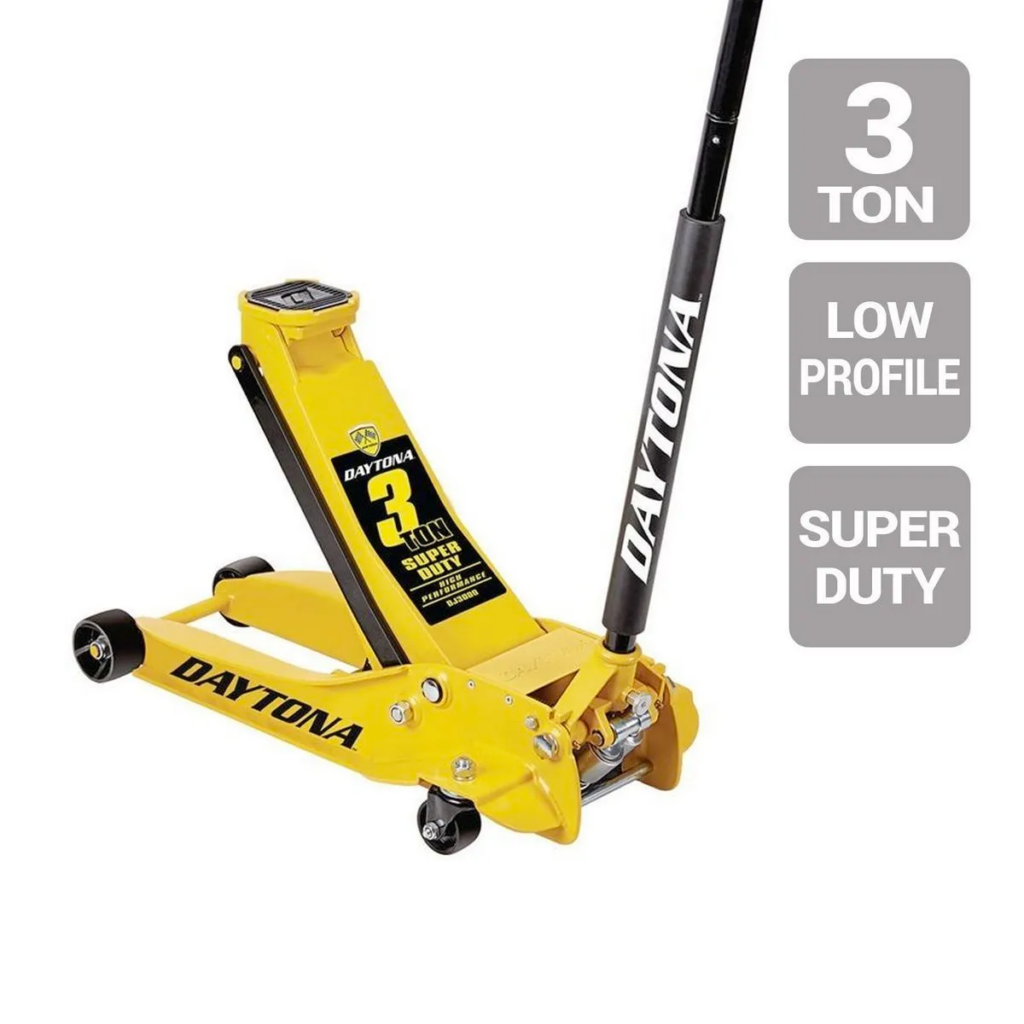
The DAYTONA 3-Ton Low-Profile Superduty Floor Jack uses a low-profile steel chassis paired with a long lift range that extends past 23 inches. Its hydraulic system includes premium piston seals and an internal magnetic filtration system designed to capture metal particles and reduce pump wear over time.
RAPID PUMP dual parallel-pump technology shortens the distance between the floor and the lift point by requiring fewer handle strokes. A universal-joint release also allows the jack to lower from any handle position.
Pros
- Reaches the lift point quickly with fewer pump strokes
- Provides more room for brake and suspension work
Cons
- Feels heavier and harder to move or transport than other jacks
- Takes up more storage space than compact jacks
5. Duralast 3-Ton Floor Jack

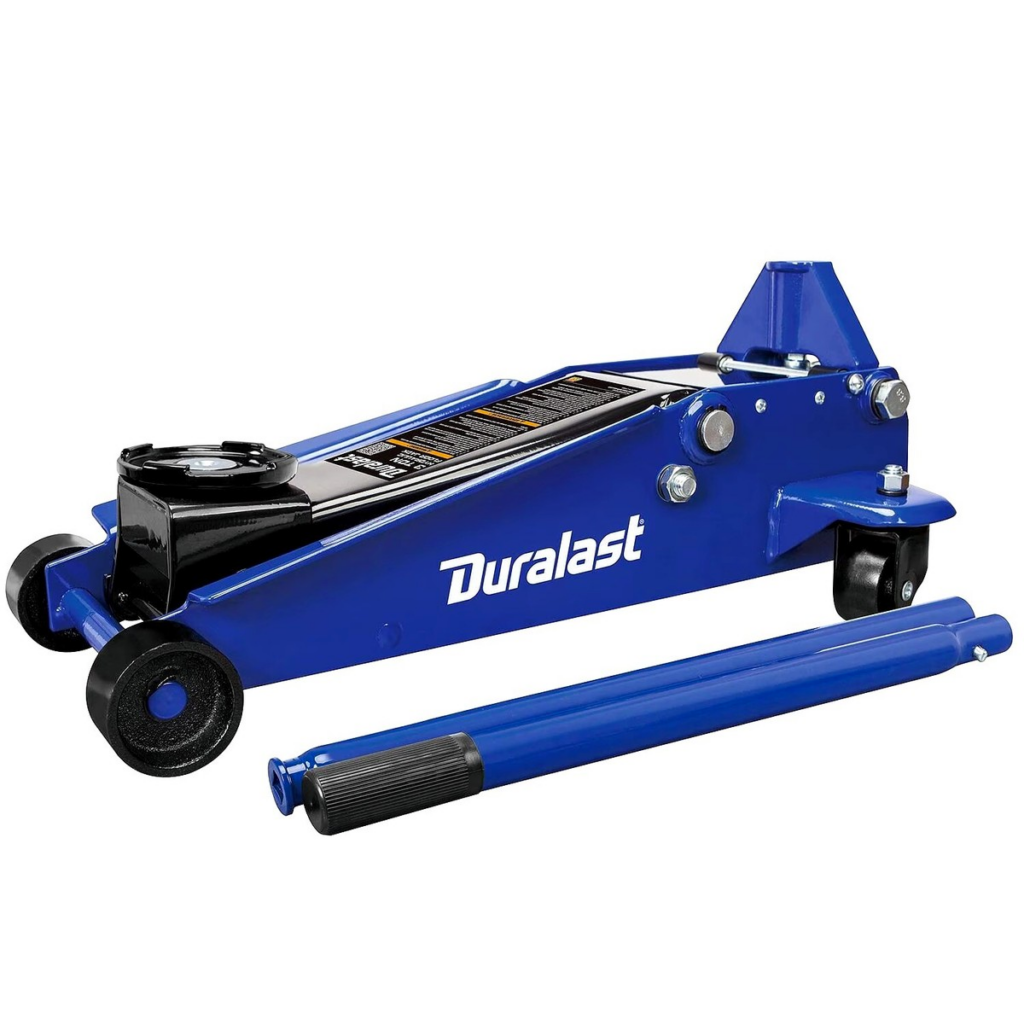
The Duralast 3-Ton Floor Jack uses a steel frame with a double-pump piston system to speed up initial lifting. Its lift range starts at just over five inches and reaches the mid-18-inch range. A U-joint release mechanism allows the jack to lower the vehicle in a controlled manner even when the handle isn’t perfectly aligned.
The hydraulic system meets ASME PASE safety standards and is intended for routine maintenance rather than extended lift height or low-clearance access.
Pros
- Reduces the number of strokes needed to start lifting
- Holds up well to regular garage use
Cons
- Feels unfit for very low-profile vehicles
- Comes with lower lift height than some extended-range 3-ton jacks
Features to look for when choosing a 3-ton floor jack
Some jacks are easier to slide into place, while others give you more room to work once the vehicle is lifted. These details affect how comfortable and steady the job feels, especially if you’re working alone. Pay attention to the following features to avoid buying a jack that technically works but feels awkward every time you use it.
Low-profile design
A low-profile jack makes it easier to get it under the vehicle. If the front of the jack sits too high, you may have to reposition the car or struggle to line it up with the lift point. A lower front edge lets the jack roll farther underneath, so the saddle lands where it should. This saves time during setup and reduces the chance of placing the jack slightly off target.
Lifting range
The lifting range affects how much space you have once the vehicle is raised. If the jack doesn’t lift high enough, placing jack stands or working underneath can feel cramped. A taller lift gives you more room to see what you’re doing and move tools around comfortably. This makes a noticeable difference in jobs like brake work or tire rotations, where the extra clearance makes the work easier to manage.
Weight capacity
A floor jack with a 3 ton lifting capacity works for a wide range of everyday vehicles, which is why it’s such a perfect choice for most garages. It’s suitable for most sedans, coupes, crossovers, and many light trucks when lifting one end of the vehicle at a time. This gives you flexibility if you work on more than one type of vehicle or upgrade to something slightly heavier later.
Safety features
Safety features help control the lift if something unexpected happens. Built-in overload valves prevent the jack from being pushed beyond its rated limit, even if you keep pumping. A controlled release valve allows the vehicle to lower slowly instead of dropping suddenly. These details help when you’re working alone or repositioning jack stands.
Lifting points
Lifting points are the spots under a vehicle where it’s safe to place a jack. A floor jack should reach these points easily without forcing you to angle the jack or adjust the vehicle’s position. Saddles that rotate or sit flat help the jack stay centered as the vehicle rises. When the jack lines up naturally with the lifting point, the vehicle stays more stable.
Discover the best 3-ton floor jack for your shop with Wrenchers
A dependable 3-ton floor jack is a staple in any home garage. The right jack makes everyday maintenance safer and easier, whether you’re rotating tires, servicing brakes, or lifting one end of a vehicle for inspections.
Wrenchers carries a wide range of 3-ton floor jacks built for real garage use. You’ll find low-profile designs that slide under tight clearances, fast-pump models that cut down setup time, and durable steel or lightweight aluminum options depending on how you work. Each jack can handle common cars, crossovers, and light trucks without taking up unnecessary space.
If you’re looking for a reliable 3-ton floor jack that fits your vehicle and your workspace, Wrenchers makes it easy to compare jack options, use flexible financing, and choose the right tool for you with confidence.
Discover the best 3-ton floor jack with Wrenchers.
Best 3-ton Floor Jack FAQs
Is a 3-ton floor jack enough for a truck?
A 3-ton floor jack is enough for many light trucks and SUVs since you’re typically only lifting one side of the vehicle at a time. This includes vehicles like midsize pickups, half-ton trucks, and most everyday SUVs. What matters is that the jack can reach the truck’s lifting points and provide enough height to work safely.
For very large or heavy-duty trucks, a higher-capacity floor jack for trucks may feel more stable. Check both your vehicle’s weight and ground clearance to confirm whether a 3-ton jack is a good fit.
How do I choose the best floor jack style?
Start by looking at your vehicle’s ground clearance and where the lifting points sit underneath. If the front of the car sits low, a low-profile jack will be easier to slide into position without extra setup.
Next, think about how much space you have to work in and store the jack when it’s not in use. If you move the jack often or work in a tight garage, a lighter or more compact style can make a big difference.
Finally, consider how often you’ll use it.Occasional maintenance may not require the same size or build as frequent garage work.
Are aluminum or steel floor jacks better?
Aluminum and steel floor jacks each have their advantages. Aluminum jacks are lighter, making them easier to carry, reposition, or store after use. Steel jacks weigh more but often feel more stable during lifting and are commonly used for regular garage work. If portability matters most, go with aluminum. If you prioritize a solid feel, go with steel.
