
Scissor car lifts use compact, folding platforms to raise vehicles safely off the ground. They give professionals and DIYers a stable alternative to floor jacks and stands, while taking up less permanent space than many post-style lifts. Used correctly, they support routine service, inspections, and underbody work in both home garages and professional bays.
Choosing the best scissor car lift means looking at capacity, lift height, footprint, and power source, then comparing those details to your ceiling height, concrete, and vehicle mix. Some models have lower lift heights for tire and brake work, while others reach full-rise heights that feel closer to working under a two-post lift. The goal is a lift that feels stable, lines up with proper lift points, and leaves enough clearance to move tools and creepers under the car.
This guide reviews some of the best scissor car lifts available, highlights proven models, and explains key features to watch. Use it to narrow options, compare specs, and choose a lift that fits your space, budget, and daily workload.
Best Scissor Car Lifts for Home Garages and Professional Shops
The scissor car lift you choose affects daily workflow, reliability, and how smoothly each job runs. Here are some of the best options for home garages and professional shops to consider:
- BendPak

BendPak scissor lifts give shops full-rise, mid-rise, and low-rise lifting in compact footprints. Full-rise models allow technicians to stand upright while working. They eliminate side posts that crowd the bay, and still handle passenger vehicles and light trucks up to about 7,000 lb. Low-rise and mid-rise units provide quick-service access for tires, brakes, detailing, and suspension.
Portable designs such as the MD-6XP and LR-60 use electric-hydraulic power, multi-position safety locks, and rubber lifting blocks to deliver stable, repeatable lifts almost anywhere in the shop. BendPak scissor lifts feature strong build quality, reliable operation, and ALI-certified performance across the entire line.
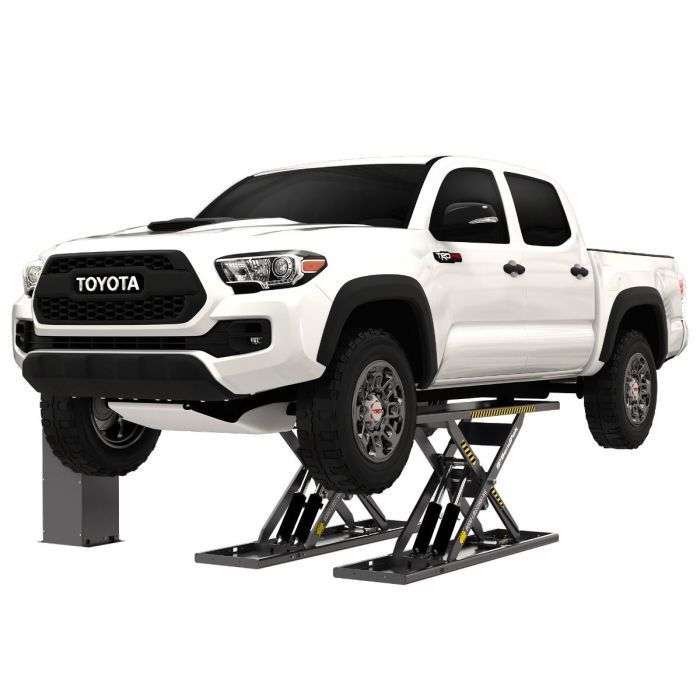
Pros:
- Open-center platforms provide full access for undercarriage work
- Mechanical lock bars, pneumatic releases, and hardened pivot pins enhance safety and durability
- Rubber lift blocks and heavy-duty steel frames handle demanding shop loads
- Portable power units and compact footprints suit shops with limited floor space
Cons:
- Taller lowered height means very low cars may need boards to drive on and off the lift.
Best for: Shops that want ALI-certified scissor lifts with open-center designs, strong build quality, and full-rise or mid-rise options
Learn more about BendPak scissor lifts.
- Norco
Norco builds heavy-duty lifting equipment out of high-grade materials, including scissor-style powertrain lift tables for serious drivetrain work.
The table raises and lowers components through a wide height range so techs can bring heavy assemblies to a comfortable work level for removal, installation, and teardown. It also doubles as a stable work surface once the load sits at height, which turns one piece of equipment into both lift and bench.
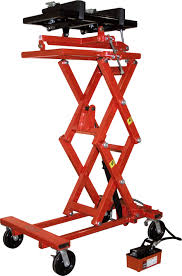
Pros:
- Scissor-lift design provides 360-degree access around the load
- Twin hydraulic cylinders improve lifting support and platform stability
- Low drive-on height supports easier vehicle loading in tight bays
- Heavy-duty ratchet tie-downs help secure the load during lifting
Cons:
- Not suitable for heavy-duty vehicles or frequent professional use
- Requires considerable effort to lift
Best for: Professional shops that need a heavy-duty scissor powertrain table for engines, EV battery packs, and drivetrain assemblies
Learn more about Norco scissor car lifts
- APlusLift

APlusLift focuses on mid-rise scissor lifts, mainly portable units. Its lineup includes models rated at 6,600 lb and 9,000 lb, with lift heights up to 55 inches on the portable version and 39 3/8 inches on the higher-capacity unit. Each lift uses dual hydraulic cylinders with electric release, and many come with move kits and truck adapters. APlusLift also publishes CE test notes, dimensions, and delivery details, so buyers can compare height, accessories, and options before they order.
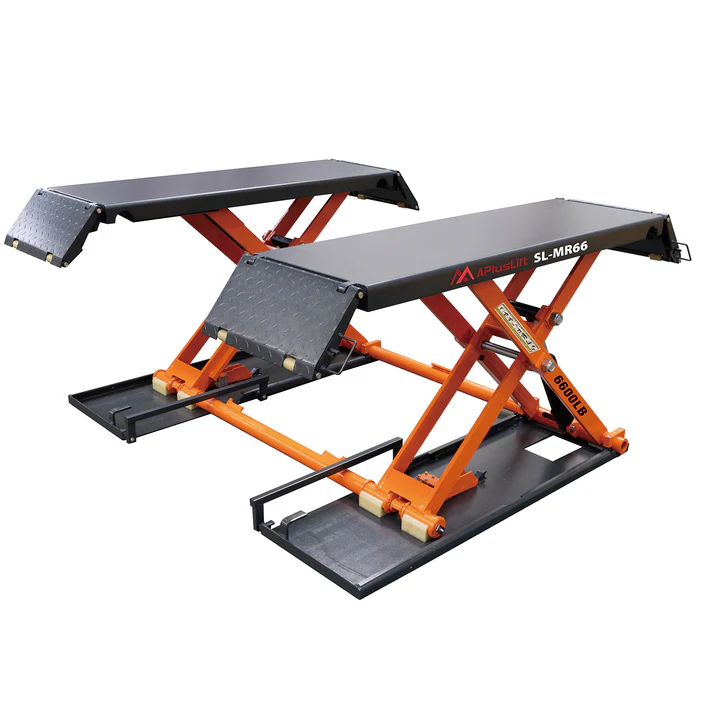
Pros:
- CE-certified structure and a hydraulics system increase safety margins
- Adjustable screw pads and truck adapters extend usage flexibility across different vehicle types
- Compact footprint and low overall size fit smaller bays or seasonal lift use
- Dual large hydraulic cylinders improve lifting stability throughout the lifting range
Cons:
- Lift is not suitable for everyday or heavy use
- Rear wheel drop plate requires modification to use properly
Best for: Garages and small shops that need a portable mid-rise lift for tire work
- Hunter

Hunter sells RX-series scissor alignment lifts in four capacities, ranging from 10,000 to 16,000 lb, with 2 swing jacks and 24- or 26-inch runways. Racks support 2-wheel alignment wheelbases in a fixed 162 to 195 inch range. RX16 and RX14 force shops to choose between flush-mount and surface-mount layouts, while RX12 and RX10 offer both.
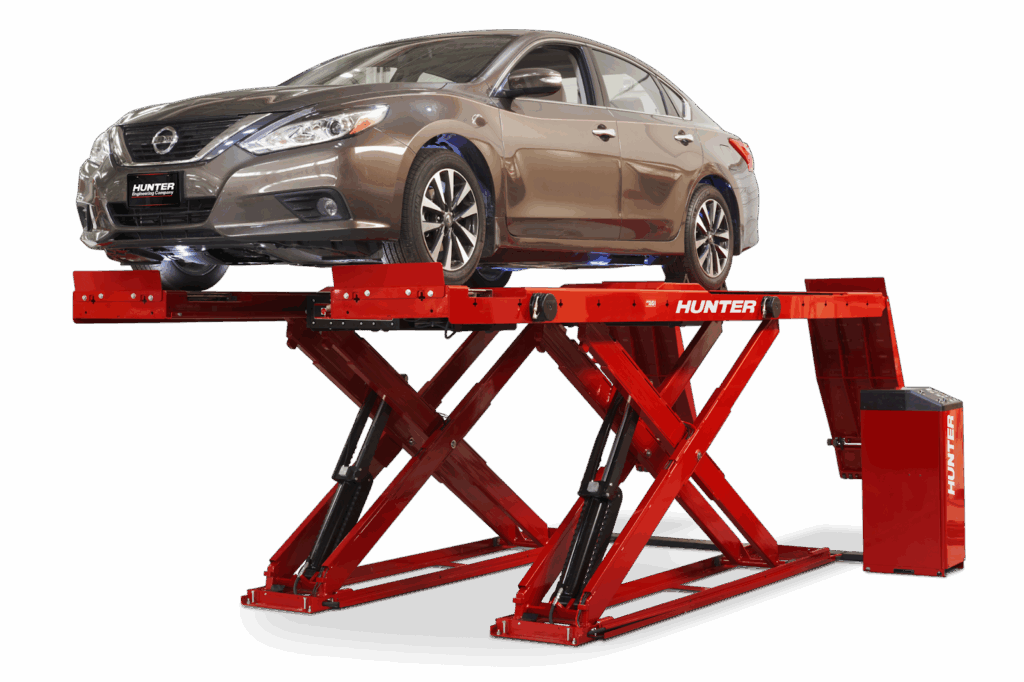
Pros:
- Low drive-on height helps with ground clearance and loading concerns
- Fast descent with soft landing shortens lowering time and noise
- Built-in rear slip plates allow four-wheel alignments on many vehicles
- Stainless steel turnplates resist corrosion and maintain alignment accuracy
Cons:
- Designed to work as part of a Hunter alignment system, so the full benefit depends on pairing it with Hunter alignment equipment.
Best For: Alignment-focused shops that need full-rise, open-front scissor runways with long-wheelbase support
- Rotary
Rotary offers a line of compact scissor lifts built for shops that need lifting solutions in tighter areas or bays with limited space. The lineup includes models in several capacities, such as 7,700 lb, 12,000 lb, and 14,000 lb units, and each lift stays within a low-profile, scissor-style format that fits environments where larger lift structures are harder to place.
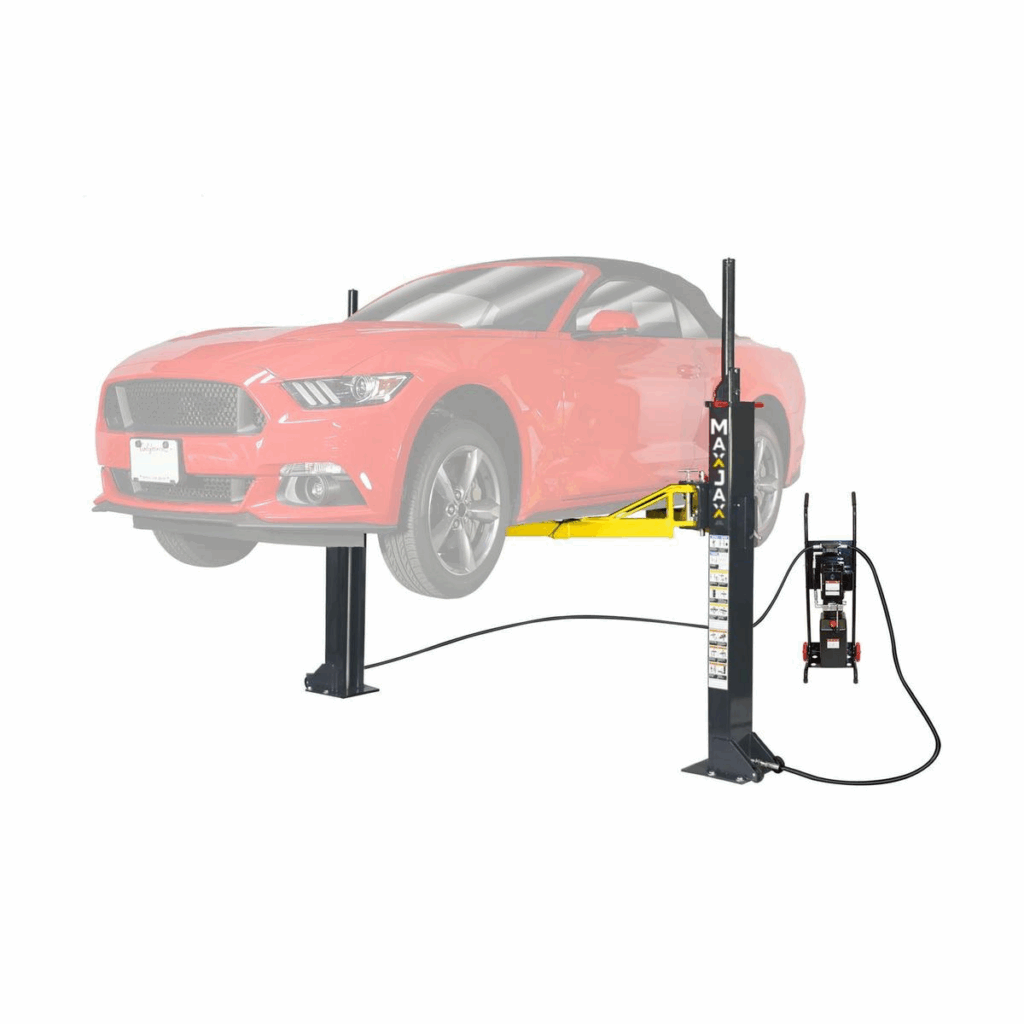
Pros:
- Portable two-post design delivers full under-car access in low-ceiling garages
- Direct-drive cylinders provide smoother lifting with fewer wear components
- Urethane wheels and quick-connect hydraulics allow fast rolling storage
Cons:
- High initial cost requiring significant upfront investment
Best for: Home mechanics and small shops that need two-post undercar access in low-ceiling garages
- Nussbaum

Nussbaum sells scissor lifts for passenger cars and transporters under the UNILIFT and SPRINTER names. UNILIFT models use inground or above-ground runways, with capacities from about 3,200 kg to 8,000 kg and lift heights around 1,877 mm. Some versions add platforms up to 6,000 mm and flush-mount options. SPRINTER Mobil units stay around 3,200–3,500 kg and use mobile platforms.
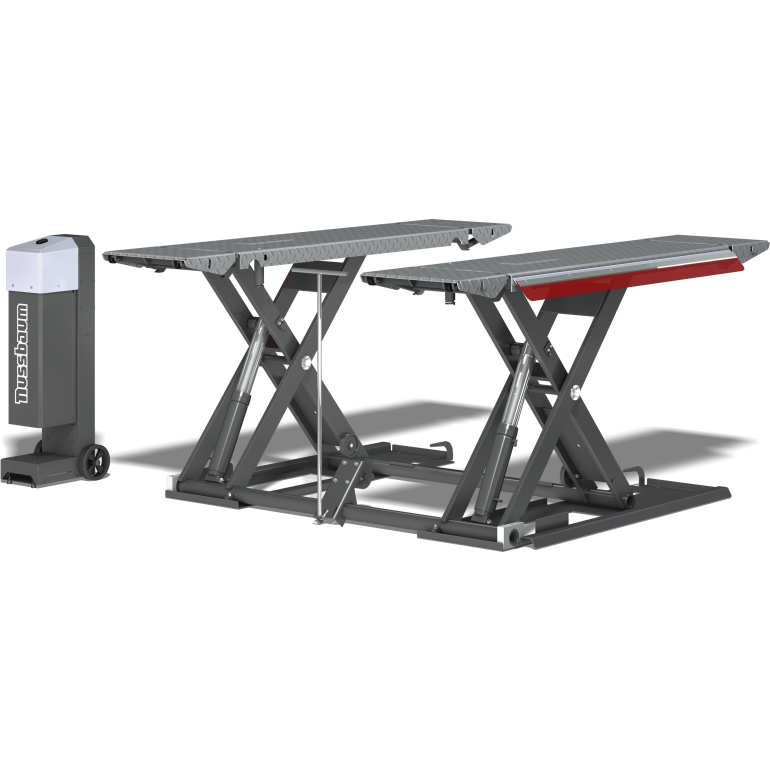
Pros:
- Double scissor designs convert parking spaces into fully usable bays
- 360° vehicle access supports work around the entire car
- HyperFlow technology balances hydraulic pressure automatically during each stroke
- Very low runways with short ramps reduce space requirements
Cons:
- Older units may develop hydraulic leaks
Best for: Shops needing low-profile full-rise and alignment scissor lifts with flexible installation and full around-vehicle access
- QuickJack

QuickJack sells portable low-rise lifting systems in several capacities, commonly 3,500 to 7,000 lb, using two separate hydraulic platforms and a small power unit. While it isn’t a traditional scissor lift, it delivers the same low-profile, quick-up lifting capability many buyers want for routine maintenance—especially in tight home-garage setups.
The frames sit low for floor use in home garages, truck paddocks, and small shops. Units raise vehicles to a fixed working height with built-in locking positions and require matching the frame length to wheelbase. Operation depends on external power and flat concrete, and the open-center layout leaves crossbeams under the tires, not completely clear floor access.
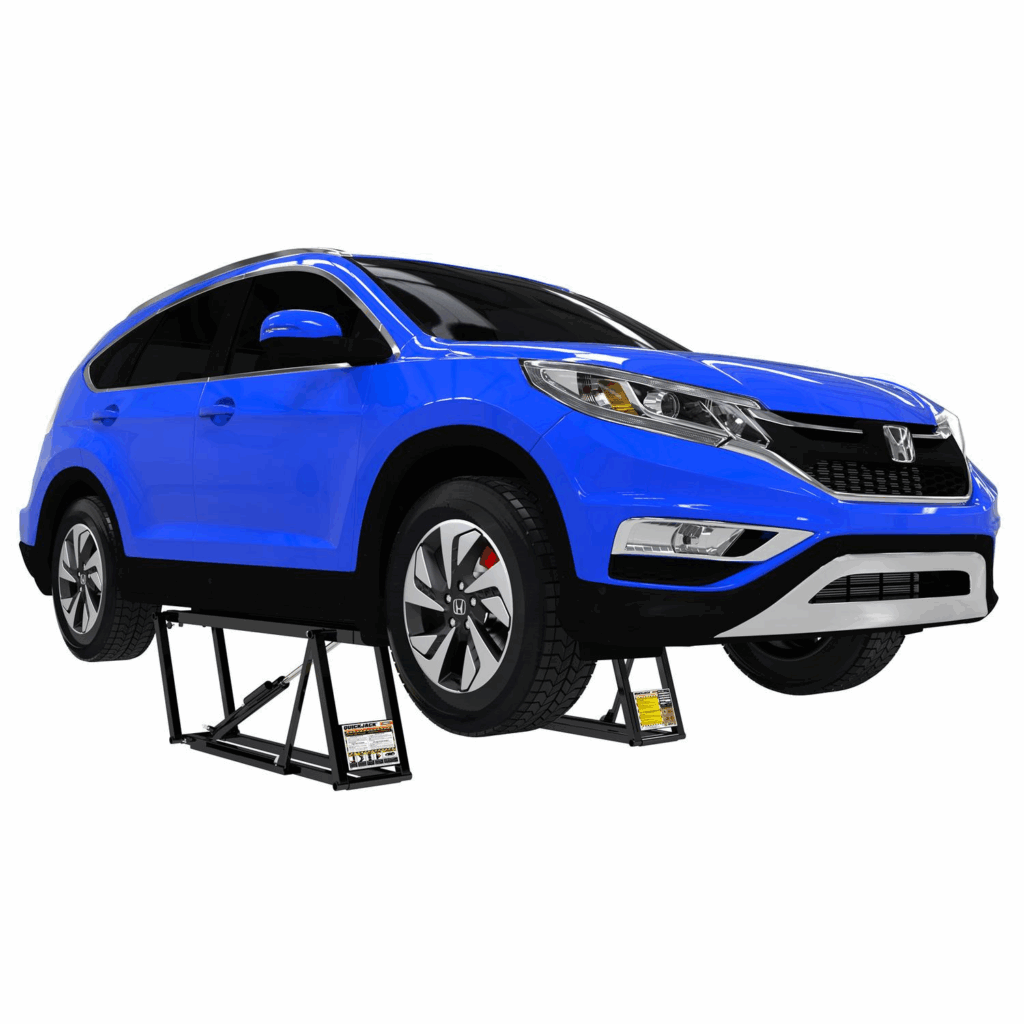
Pros:
- Automatic safety locks engage during lift for secure support
- Wide capacity range supports sedans up to light trucks and SUVs
- Two separate platforms provide open-center undercar access without crossbeams
Cons:
- Not ideal for heavy-duty vehicles or intensive professional use
- Requires positioning and setup each time
- Locking arms can slip out of place and fail to engage automatically
Best for: Home garages, DIYers, and track-day drivers who need portable, low-rise lifting for underbody work in tight or low-ceiling spaces
Features to Look For in the Best Scissor Lifts
When selecting a scissor lift, here are some factors to consider:
Weight Capacity
Weight capacity shows how much a scissor lift can safely raise. Choose a rating that comfortably covers your heaviest vehicle plus fuel and gear. Compare capacity, wheelbase range, and pad contact points so loads stay balanced, especially if you see trucks and SUVs often.
Lift Height
Lift height shapes how comfortable the work feels. Low-rise lifts (about 20–30 inches) suit quick tire and brake jobs, mid-rise units (around 36–48 inches) fit longer wheel and underbody work, and full-rise models bring the frame near standing height for exhaust, driveline, and full underbody repairs. Check both maximum and minimum height, plus locking positions, so techs can set safe, comfortable working levels.
Portability
Portability matters in tight or shared spaces. Portable scissor lifts roll on casters or wheels and store easily when not in use. Look for units that plug into standard power, use quick-connect hydraulics, and have simple controls so one lift can serve multiple bays, mobile work, or seasonal overflow.
Safety
Safety sits at the center of a good scissor lift. The lift needs a wide, stable base and strong steel arms that do not twist under load. Automatic safety locks catch the platform at different heights, so the weight rests on solid stops instead of only on hydraulic pressure.
Backup safety valves slow movement if a hose leaks or a line fails. Textured platforms, wheel chocks, and clear warning labels cut down on slips and setup mistakes. Simple two-button controls and a big emergency stop switch help each tech stay in charge. Many shops also choose lifts with trusted safety labels such as ALI, since those marks show the lift passed extra checks.
Ceiling Height
Ceiling height decides how much real working room you get from a scissor lift. Look at the full rise of the lift, add the height of the tallest vehicle you service, then compare that number to the distance to the roof, lights, and door tracks. Low ceilings often work better with low-rise or mid-rise lifts that still give solid access without pushing close to overhead hazards.
Taller bays support full-rise scissor lifts that let techs stand upright under the vehicle. Also check for sprinklers, HVAC lines, and overhead doors that hang lower than the main ceiling. A quick sketch of the bay with lift and vehicle heights helps you see problems before you buy.
Types of Scissor Car Lifts
Here are the various types of scissor car lifts:
- Low-Rise: Low-rise scissor lifts raise the car just a short distance off the ground. They’re great for tires, brakes, and detailing when you do not have a tall ceiling. Most sit on the floor with rubber pads at factory lift points, and some portable versions can move between bays.
- Mid-Rise: Mid-rise lifts bring the vehicle up to around waist or chest height. They work well for brakes, suspension, and light bodywork in standard-height garages. Many have adjustable arms, rubber pads, and portable power units, so they suit general repair bays, tire shops, and home garages that need more access than a low-rise setup.
- Full-Rise: Full-rise scissor lifts raise vehicles high enough for techs to stand upright underneath. They often serve as the main lift in professional shops, in pad-style or drive-on runway designs. These lifts need careful planning around ceiling height, doors, and overhead lines, but they give strong access for exhaust, driveline, and full underbody work.
Discover the Best Scissor Car Lifts with Wrenchers
Scissor car lifts give shops and garages a compact way to raise vehicles when space or ceiling height limits other lift styles. They sit close to the floor, fold away when not in use, and still give strong access for tires, brakes, and undercar work. Good scissor lifts balance capacity, footprint, and lift height so techs stay safe and comfortable while they work.
Wrenchers lists dedicated scissor lifts for cars and carries models from brands like BendPak and Norco. You can choose portable low-rise units such as 6,000-lb BendPak LR-60P models for tight bays, or full-rise, open-center designs that sit flush with the floor for better undercar access.
Explore Scissor Lifts with Wrenchers.
